Outdoor surfaces can end up being disappointing for a number of reasons. Water sits where it shouldn’t. The surface gets uncomfortably hot. It becomes slippery at the wrong time. Cleaning turns into an in-depth weekly project. None of these are inherently “bad product” problems. More often than not, they’re mismatch problems.
Choosing between composite decking tiles and traditional outdoor tiles can seem like a matter of taste or preference, but in reality, the best choice is the one that accommodates your space and the way the area gets used.
Balconies & Roof Terraces: Choosing Between Decking Tiles Or Outdoor Tiles
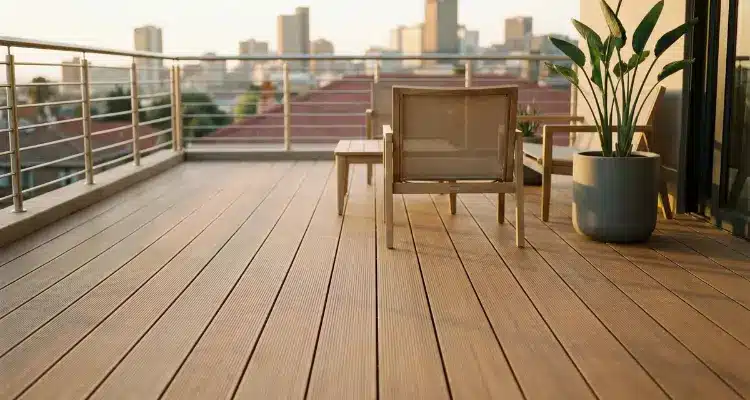
Balconies and roof terraces are the spaces where a “nice looking finish” can become a headache fast. They’re exposed, they tend to dry unevenly, and they’re often more sensitive to trapped moisture than a ground-level patio.
What To Consider
Balconies and terraces need a reliable way for water to drain and for the surface to dry out between rain, washing, and morning dew. If moisture sits for long periods, you’re more likely to deal with grime build-up, slippery patches, and a host of deeper issues. Balconies usually also have a fixed substrate and, in many cases, waterproofing considerations underneath. That’s why it helps to think about how the surface interacts with the base: does it allow airflow and drainage, or does it rely on sealed joints to keep water where it should be?
Outdoor tiles require you to pay attention to grout lines over time. With composite decking tiles, the maintenance profile is more about regular sweeping and rinsing, and keeping any gaps clear so that water and debris don’t collect.
On a small balcony, a cracked tile or stained patch can stand out. Traditional tiles can be repaired, but colour matching and pattern continuity aren’t always guaranteed. Modular composite decking tiles are easier to replace piece by piece if a section gets damaged.
Patios & Courtyards: Decking Tiles Compared To Outdoor Tiles
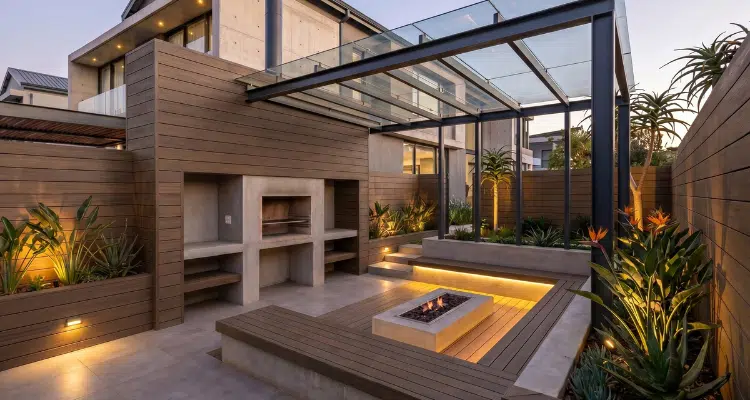
Patios and courtyards are outdoor surfaces that tend to get “properly lived on” the most, and there’s a difference between walking across a surface and standing on it for 40 minutes while you braai.
What To Consider
A patio that gets full afternoon sun behaves very differently to one that’s shaded by trees or walls. The same surface can feel comfortable in one yard and brutally hot in another, so map where the sun hits before you commit.
Traditional outdoor tiles can hold heat longer, especially after a hot day. composite decking tiles feel quite different because of material they’re made of, surface texture and airflow.
Pool And Splash Zones: Decking Tiles Versus Outdoor Tiles For Wet Grip
Pool areas are noticeably less forgiving than patios. Water is constant, and surfaces dry unevenly.
What To Consider
Around a pool, the surface has to handle wet feet and the occasional sprint to a towel. Traditional outdoor tiles can work beautifully here, but you need to choose a tile designed for outdoor slip resistance and keep an eye on how texture and contaminants affect traction over time. Keep in mind that pool water carries chlorine residue, dust, and sunscreen. If water sits or grime collects in corners, surfaces will get slippery and the area can start to look tired.
Some outdoor tiles have aggressive textures for slip resistance, which can be great for safety, but harsh on bare feet if you spend a lot of time poolside. Composite decking tiles tend to have a more consistent texture, which can feel gentler, but you still need to consider wet grip, especially in high-splash zones and on steps.
With traditional outdoor tiles, upkeep involves regrouting and paying attention to textured surfaces where grime can lodge. Whereas with composite decking tiles, you’ll typically be managing comparatively minor maintenance.
Keep in mind that shaded corners, areas behind loungers, and low airflow zones will always be more prone to slippery build-up, regardless of what you install. Choosing a surface that dries well and cleans easily makes that battle far easier to win.
Are You Still Torn Between Composite Decking Tiles or Outdoor Tiles?
Sometimes both options look good on paper. That usually means your space can handle either, so the decision comes down to the small factors below.
Heat’s Effect on Outdoor Surfaces
If your area gets a lot of hard sun, treat heat as a first-class decision. In most outdoor settings, darker finishes run hotter, regardless of whether you choose composite decking tiles or traditional outdoor tiles. Mid-to-light tones tend to be more forgiving, especially on patios, courtyards, and pool surrounds where people walk barefoot.
A useful tip: if you already avoid walking on certain paving at midday, you’ll probably notice the same pattern again unless you choose a colour that absorbs less heat and plan for shade.
The Difference in Grip Between Decking Tiles & Outdoor Tiles
If you’re leaning toward outdoor tiles, prioritise tiles that are made for exterior use and choose a slip-resistance level that matches the zone, especially near pools and steps. Our composite decking tiles are built with an anti-slip surface, but outdoor tiles can be just as effective when you choose an exterior-rated finish with the right slip rating for the area.
Outdoor Surface Texture & Why It’s Important
You’ll notice texture most in two moments: barefoot lounging and standing still (braais, outdoor chats, supervising kids, etc.). Highly textured outdoor tiles can feel secure yet abrasive. Smoother tiles can feel pleasant but may show dust and can feel slicker when dirty. Composite decking tiles often sit somewhere in the middle: a more consistent underfoot feel that suits mixed use, as long as you keep debris from collecting in the gaps.
Repair Considerations for Your Outdoor Surfaces
Outdoor tiles can be repaired, but matching later can be difficult if the tile range changes or fades differently over time. Composite decking tiles can be simpler to install or swap out piece by piece, depending on what needs to be repaired, as well as availability and whether you keep spares. If you know you’ll obsess over a single cracked tile or stubborn stain, composite decking tiles are probably the better option for you.
Before You Choose Composite Decking Tiles or Outdoor Tiles
If you’re still torn, this is the simplest way to land the choice. Start with the factor you care about most and see which option fits that priority more naturally.
| If this matters most… | Composite decking tiles | Outdoor tiles |
|---|---|---|
| Drainage and faster drying | Often suits areas where airflow and quick drying help, especially balconies | Can work well, but relies on correct falls and installation quality |
| Wet grip in splash zones | Texture and cleanliness matter, choose with wet-use in mind | Choose outdoor-rated, slip-resistant tiles suited to wet areas |
| Heat in full sun | Colour and exposure matter, mid-to-light tones usually absorb less heat | Colour and exposure matter, darker tiles hold heat longer |
| Cleaning effort week to week | Sweep and rinse, keep gaps clear of grit and leaves | Grout lines and textured finishes can hold dirt, varies by tile choice |
| Spot repairs later | Modular replacement can be simpler when spares are available | Repairs are possible, but matching colours can be tricky |
Final Checklist to Pick The Right Outdoor Surface
Before you commit, run through these quickly:
- Where does water sit, and how does it leave the area?
- Will people be barefoot here in midday sun or around water?
- What cleaning routine will actually happen, not the ideal one?
- If one piece gets damaged, do you want a simple swap or a patch-and-match repair?
Think about it this way: if your choice holds up on an ordinary Tuesday, you’re set. If the surface you’re leaning toward still feels comfortable and realistic in that scenario, you’ve made the right decision.
If you’re leaning towards, or curious about composite decking tiles, consider exploring composite decking tile options designed for proper drainage, heat control, and easy maintenance. Browsing examples can help you see which surface suits your space best.