Where Composite Wall Cladding Works Best and What It Helps You Achieve
Sometimes a space needs warmth and texture. Sometimes it needs privacy, a clean way to finish the space. Wall cladding is a versatile way to achieve this by helping shape the look of a space while also improving the way different materials sit together, giving plain surfaces a more considered finish. Wall cladding is available in an array of materials, but some are more durable than others, and many require different levels of maintenance and care.
Composite wall cladding is designed to act as both a protective outer layer and a design finish, which makes it ideal for everything from outdoor living areas to interior feature walls. It provides your space the natural look of timber, but without any of the same sanding, sealing, and repainting hassles that timber often demands in order for it to keep its appearance in shape.
Our composite wall cladding is made to resist issues like cracking, swelling, and fading over time. This gives you all the warmth and texture of timber cladding, paired with a finish that asks far less of you once it is in place. In this article, we’ll be exploring the different use cases of our composite wall cladding ranges.
Wall Cladding for Front Elevations and Entry Zones
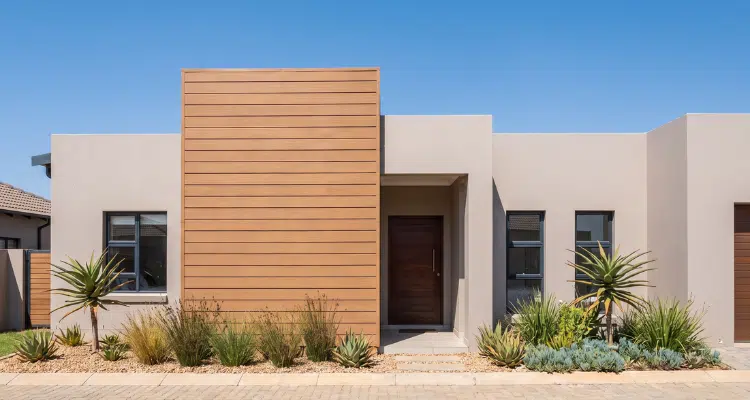
Front entry zones are some of the best places to use composite wall cladding because they carry a lot of visual weight. A front-facing wall, entrance surround, patio wall, or exterior panel near the doorway can help shape the first impression of a building, which means the finish needs to feel both deliberate and durable.
Wall cladding tends to suit modern spaces best, especially ones that rely heavily on concrete, glass, steel, or smooth plaster. Those materials look sharp and contemporary, but they can also leave an entrance feeling slightly clinical, cold or flat. Composite wall cladding helps balance that out. It catches the eye and can create a welcoming arrival point while still fitting neatly into a clean, contemporary design. Our boards can be installed vertically or horizontally, so you get flexibility in how you shape the visual effect of the entrance.
Entry walls and front-facing exteriors are often exposed to direct sun, rain, and temperature changes, so the material used in these areas needs to hold its finish well over time. This is what makes composite wall cladding such a smart option for visible exterior walls.
What Does Wall Cladding Achieve Here?
- A stronger first impression by giving the entrance a more polished, intentional finish
- More warmth on modern façades through texture and timber-inspired character
- A cleaner, more considered entrance that feels designed rather than purely functional
- Lower upkeep on exposed walls thanks to a finish that does not need the same sanding, sealing, or repainting cycle as timber
Wall Cladding for Outdoor Living Spaces (Like Patios and Entertainment Areas)
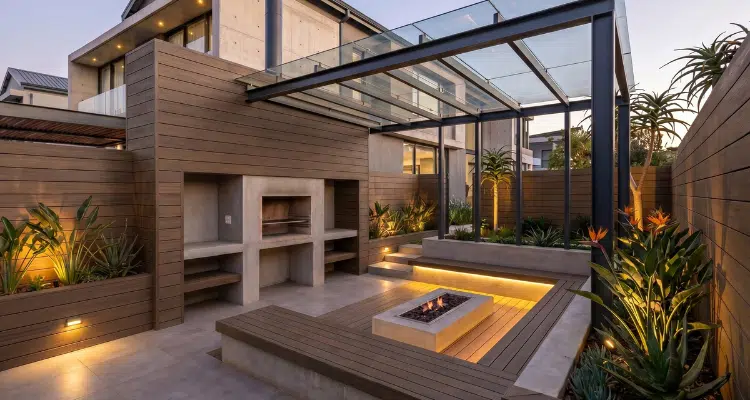
Patios, entertainment areas, and other outdoor living spaces are some of the most effective places to use composite wall cladding. These spaces bring together a mix of surfaces and structures, from decking and paving to plaster, planting, built-in seating, and braai features. Without a strong finish, the overall space can feel a little disconnected.
Wall cladding can work particularly well for covered patios, entertainment walls, braai areas, seating backdrops, and the transition between decking and adjoining vertical surfaces. It helps define zones, strengthens the link between different materials, and gives outdoor areas a more complete look. Outdoor entertainment areas are high-use spaces, and the finishes used in them need to handle exposure without becoming labour-intensive to maintain.
Pro tip: Our Ultra Wall Cladding range uses a concealed fixing system that creates a sharper, more seamless surface, while the available profiles (Tongue & Grooved and Fluted) give you flexibility on the look you’re trying to achieve.
What Does Wall Cladding Achieve Here?
- A more cohesive outdoor entertaining area by connecting walls, seating zones, and surrounding finishes
- Visual warmth without timber upkeep in spaces designed for relaxing and hosting
- Better flow between surfaces and structures especially where decking meets vertical elements
- A finished look in high-use outdoor zones with a material designed for long-term exterior performance
Wall Cladding for Garden Walls, Boundary Walls, and Privacy Features
Garden walls, boundary walls, and privacy features are some of the most often overlooked surfaces on a property. They often get treated as something that is purely functional, which can leave your outdoor spaces feeling harder, flatter, or more disconnected than they need to. Used on the right wall, cladding brings in warmth, texture, and a more finished architectural look.
Privacy features do not have to feel heavy or purely defensive. Wall cladding offers a cleaner, more refined alternative for screening and boundary treatments, helping these areas feel integrated with the rest of the property. It creates a stronger visual link between walls, decking, planting, and other outdoor finishes, which makes the landscape feel more cohesive overall.
What Does Wall Cladding Achieve Here?
- More privacy around gardens, patios, pool areas, and neighbouring boundaries
- A softer finish on harsh walls through added texture and a warmer timber-look surface
- Better visual connection to landscaping by tying walls in with decking, planting, and surrounding outdoor materials
- Less maintenance over time on exterior surfaces that are exposed to weather year-round
Wall Cladding for Feature Walls in Interior Spaces
Composite wall cladding is not limited to exterior use. It also works beautifully as an interior finish in spaces that need that little bit of extra depth and texture. This is something that paint or plaster can seldom offer on their own. We’ve seen this work especially well in lounges, dining areas, entertainment rooms, reception spaces, and other interiors where a plain wall leaves the overall design feeling flat.
Concrete-look surfaces, large glazed openings, polished floors, and simple built-in elements can create a strong visual base, but they often benefit from something that softens the space without making it feel busy. Composite wall cladding adds texture and warmth, helps break up harder finishes, and creates a more grounded backdrop for furniture, lighting, and décor. Because it can be used as a full feature wall or applied more selectively, it’s ideal for both residential and commercial interiors alike.
Many people want the look of timber in their indoor spaces, but without the same upkeep associated with wood panelling. Composite wall cladding is the perfect solution to this requirement, as it is a durable, low-maintenance option for spaces that need to keep looking sharp over time, whether that is a home entertainment area, a hospitality setting, or a customer-facing commercial interior.
What Does Wall Cladding Achieve Here?
- Depth and texture indoors on walls that would otherwise feel plain or one-dimensional
- Warmth in sleek or minimalist spaces where harder finishes need balance
- A more durable feature finish in areas that need to keep their appearance over time
- A natural timber look without timber-level upkeep in both residential and commercial interiors
Wall Cladding for Hospitality and Commercial Settings
Hospitality and commercial spaces both often need finishes that look polished and prestigious. Reception areas, restaurant and café feature walls, guest-facing façades, outdoor dining zones, and retail or office interiors: these all need materials that contribute to the look of the space without these materials creating unnecessary upkeep.
A reception wall, a covered outdoor dining area, or a commercial interior with large expanses of plaster, glass, or concrete can benefit from a finish that adds depth without making the space feel busy. Wall cladding can work as either a full wall treatment or as a more focused feature, depending on the scale of the project and the role the wall needs to play within the overall design.
Materials that need frequent sanding, sealing, repainting, or repair to stay presentable do not suit busy spaces. This is a big part of what makes composite wall cladding (in particular) so effective.
What Does Wall Cladding Achieve Here?
- A more polished customer-facing environment in reception areas, hospitality interiors, and visible exterior zones
- Durable surfaces in visible areas that need to keep their finish over time
- Consistent aesthetics across larger spans where design continuity matters
- Lower maintenance pressure in busy settings where appearance and practicality need to work together
How to Choose the Right Spot for Composite Wall Cladding
The best place to install composite wall cladding is the place where a wall needs to do more than one job. In some projects, that means improving the look of a space that feels flat or unfinished. A good starting point is with the wall itself. Does it feel like it is missing something? If so, it’s almost certainly a good candidate for wall cladding. The right place to use composite wall cladding is the place where a wall needs to work harder, whether that means bringing in warmth, creating privacy, sharpening the finish of a façade, or making a high-use space easier to maintain.
Questions Worth Asking
Which wall feels visually flat or unfinished?
That is often the clearest sign that the space needs more texture, depth, or architectural definition.
Which area takes the most weather exposure?
Exterior walls that deal with sun, rain, and temperature shifts often benefit most from a more resilient finish.
Where would low maintenance matter most?
If a wall is highly visible but inconvenient to maintain, composite cladding can make far more sense than timber.
Which space needs more privacy, texture, or warmth?
The right application is often the one that improves both the look of the space and the way it functions.
Final Thoughts on Using Composite Wall Cladding
Composite wall cladding offers more than just a decorative finish. It helps create warmer, more cohesive spaces while also improving durability and reducing long-term maintenance. Whether it is used on exterior façades, entertainment areas, privacy walls, or interior feature spaces, the right wall cladding application can completely change the way a space looks and feels.
If you are planning a new build, an upgrade, or a DIY feature installation, composite wall cladding can give you the flexibility to create that kind of finish. Looking to enhance a space with composite wall cladding, but not sure where to start? Learn more about what buying from 4 Everdeck involves.