Summer brings longer days with stronger sun wherever you are in South Africa. The nicer weather means you’re likely using your deck more frequently, too. The last thing you want while enjoying a braai is to notice that your deck needs some attention.
Initial Checks for Preparing Your Outdoor Deck for Summer
These basic checks will identify small issues early and help you determine whether your deck needs routine preparation, targeted repairs or a more substantial upgrade.
1. Inspect the Structure and Surface of Your Deck
Walk across the full deck and pay attention to how the deck feels beneath your feet. Check for any signs of movement. The decking boards should feel secure, as should steps and railings.
Look for loose or raised fasteners, damaged boards, uneven sections and visible deterioration around the perimeter. Areas near pools, gutters, planters and shade need particular attention.
Visible surface damage won’t reveal what’s happening below the boards. Make sure to check the entire deck for significant movement, sagging or instability. These point to a substructure issue, which should be assessed by an experienced installer.
2. Keep Your Deck Clean
Start by sweeping away leaves, dust and other loose debris before washing your deck. Gaps, corners and the spaces around fixed features house dust, grime, food debris, braai grease, sunscreen and pool water residue. Clean these areas thoroughly.
Composite decking can generally be maintained with water and routine household cleaning methods. Our Care and Maintenance guide dives into specific cleaning guidance for 4 Everdeck® boards.
3. Optimise Drainage Paths and Protect Airflow
Water needs a clear route away from the deck. Blocked gaps, compacted leaves and poorly positioned outdoor items can slow drainage and leave parts of the surface damp.
Clear all debris from between decking boards and along the outer edges. If water gathers beneath any items (like furniture) on your deck, they should be lifted or moved periodically (and after rainfall) so the area below can dry.
Good ventilation keeps the substructure of your deck dry after wet weather. Avoid closing off the perimeter or filling the space below without considering how this could affect drainage and circulation.
4. Repair Existing Problems Before Adding New Features
This might be obvious, but make sure to account for any current repairs your deck requires before setting a budget for décor or cosmetic upgrades. A deck that looks good but is not structurally sound is doing you no favours.
Improve Shade and Comfort
Before choosing a pergola, awning or umbrella, spend time observing your deck under different conditions. South African weather conditions vary throughout the year, so the most suitable option will depend on where exposure is strongest, how and when the space is used and whether the household needs permanent cover or greater flexibility.
5. Track the Weather
The sun’s position changes throughout the day. A deck that feels comfortable in the morning might not be as comfortable by late afternoon. Note which parts of the deck remain shaded for long periods. These areas will stay damp after rain or pool use.
Wind conditions will affect lightweight furniture, umbrellas and shade sails most. This is particularly true for coastal homes, which need more secure anchoring than inland homes do. A short period of observation can prevent an expensive shade solution from being installed where it offers limited protection or creates new hassles.
6. Consider a Permanent Cover…
A pergola, fixed awning or roofed section can make a deck more usable during hot afternoons and passing summer showers. Permanent cover is especially helpful over outdoor dining areas, built-in seating and frequently used routes between the house and garden.
Consider how it will affect natural light inside your home, where rainwater will run and whether posts will interrupt movement across your deck.
7. …Or Use Flexible Shade
Outdoor umbrellas, retractable awnings and shade sails protect seating or dining areas without permanently covering the entire space.
Your chosen solution should fit the dimensions of your deck, leave doors and routes clear, and provide enough shade where people sit.
Plan Your Deck Around How It Will Be Used
Your deck’s layout should reflect the size of the space, how often it is used and how people move between the house, garden and other outdoor areas.
8. Define Your Dining, Relaxing and Entertainment Zones
Braai areas and serving areas should have enough room for the person cooking, as well as a clear route for people carrying food and utensils. Smoke, heat and grease also need to be considered when positioning nearby seating, shade structures and doors.
Small decks will need one area to serve several purposes. Planters, outdoor rugs and changes in furniture orientation can help define areas on your deck without adding permanent divisions.
9. Keep Movement Routes Unobstructed
Good circulation makes your deck easier and safer to use, especially when several people are moving between the house, garden, pool and braai area.
Leave enough room around tables for chairs to be pulled out without blocking the main route. Doors, gates, stairs and changes in level should remain easy to reach, even when your deck is fully furnished.
Consider how people will use the space. A narrow route that feels manageable on an empty deck may become awkward once people, furniture and planters are added to the equation.
Where space is limited, position larger items against the perimeter and keep the most frequently used route open. Furniture with a smaller footprint or pieces that can be moved easily may help the deck serve several purposes without feeling crowded.
10. Choose Seating That Suits Your Space
The best seating arrangement depends on how many people regularly use your deck and whether the layout needs to change for different occasions.
Movable chairs and lightweight tables provide flexibility for households that alternate between everyday use and larger gatherings. Benches can make efficient use of narrow edges, while corner seating may help define a relaxation area without interrupting movement through the deck.
Built-in seating offers a tidy, permanent solution and may include storage for cushions or outdoor accessories. It does, however, require more planning than freestanding furniture, and is a far more complex installation.
Pay close attention to the proportions of your deck. Deep lounge seating may suit a broad entertainment area, while slimmer chairs or a compact bench may work better on a balcony or smaller patio deck.
Need Help Planning a Bigger Summer Upgrade?
If your plans extend beyond rearranging furniture or adding shade, it helps to choose the right type of decking project before ordering materials. The 4 Everdeck® team can help you compare composite decking boards, decking tiles and related components according to the existing surface, available space and intended use.
Add Furniture, Colour and Greenery Thoughtfully
Furniture and decorative details can change how a deck feels, but they also affect cleaning, airflow and everyday movement. Each addition should suit the level of exposure in the space and be easy enough to maintain through the year.
More often than not, when it comes to deck furniture, less is more. A few well-chosen elements will usually work better than filling every open area. Make sure that you leave enough room around furniture and planters so that you can still clean your deck properly, check the surface and allow water to drain after rain or pool use.
11. Choose the Right Furniture
Outdoor furniture should be selected according to where it will stand and how much protection your deck provides.
Pieces placed under a permanent cover will face less direct rain and sunlight, while exposed furniture needs to cope with stronger UV exposure, sudden showers and regular temperature changes. In coastal areas, metal furniture and fittings require closer attention because salt-laden air speeds up corrosion.
Allow enough space around and beneath the furniture for debris to be swept away. Cushions and removable covers should also have a dry storage area so they are not left outside through heavy rain or long periods of non-use.
12. Use Rugs and Textiles Carefully
An outdoor rug can help define a dining or seating area, particularly on a larger deck. Cushions and throws can also make the space more comfortable, but all fabrics used on a deck should be designed for outdoor conditions.
Choose materials that dry quickly and can be cleaned without specialised treatment. Indoor rugs and fabrics absorb and retain too much moisture to be suitable for outdoor use. They fade quickly and will develop unpleasant odours when left outside.
Even an outdoor-rated rug should be lifted periodically. Dirt, leaves and moisture collect beneath it, especially after rain or around a pool. Moving the rug during routine cleaning allows the surface below to dry and gives you a chance to do a quick maintenance check.
13. Add Planters With Drainage in Mind
Planters introduce colour, shade and separation between different areas of the deck.
Use pots with suitable drainage holes and trays that can be emptied easily. Water should not be allowed to collect around the base of a planter or run repeatedly into one area of your deck.
Keep in mind that large pots become considerably heavier once they are filled with soil and watered. Before placing several heavy containers together, consider whether your deck is designed to support the additional load. This is especially important on raised decks and balconies.
14. Coordinate Colours and Finishes With the Home
Your deck will feel more connected to the rest of the property when its colours and finishes respond to the home’s exterior, doors, window frames and surrounding landscape.
Decking surface is the most significant decision here, more than furniture, cushions, rugs or planters. Choose a board colour and finish that works with your space.
Natural timber-look finishes can complement garden planting and warmer exterior colours, while cooler greys may suit homes with contemporary paving, metalwork or neutral walls. The amount of direct sunlight should also be considered, as colours can appear different in bright sun and deep shade.
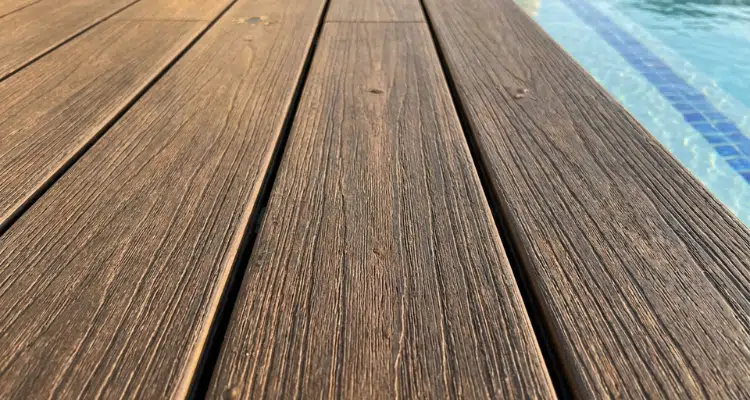
Our wood grain composite decking offers a natural-looking finish for homeowners who want the appearance of timber with the maintenance requirements of composite decking.
Railings, fascia boards and fixed structures should be included in the same visual plan. Smaller accessories can then introduce brighter colours that are easier to update as furniture and décor changes.
Make Your Deck Safer and More Usable After Dark
Long summer evenings mean more time spent outdoors. Planning for safety and planning for visibility go hand in hand, and work best when they have been considered as an interlinked system rather than two separate ones.
15. Light Steps, Edges and Movement Routes
Start with the parts of your deck that people need to navigate safely.
Steps, level changes, gates, doors and routes between the house, garden and pool should remain visible without relying on one bright light over the entire area. Smaller lights placed where direction changes can make movement easier while keeping the deck comfortable for dining and relaxing.
A layered approach may include:
- wall or overhead lighting near doors and serving areas
- low-level lights near steps and deck edges
- focused lighting around braai preparation areas
- softer ambient lighting near seating
16. Review Railings, Steps and Open Edges
Raised decks, stairs and changes in level need clear, stable boundaries.
Open edges also need attention where the surrounding layout has changed. A deck that once faced an open garden may now sit beside a pool, lower patio or frequently used walkway. The boundary should suit the current use of the space.
Our composite railings and balustrading can be used to create a coordinated finish around raised composite decks, stairs and exposed edges.
17. Plan Braais, Fire Pits and Outdoor Heaters Carefully
Braais and outdoor heaters can make a deck more useful for evening entertaining, but their position needs to be considered in relation to heat, sparks, smoke and grease.
Keep heat-producing features away from:
- combustible furniture and textiles
- shade sails and low covers
- busy walkways
- doors and windows where smoke may enter the home
- areas where children or pets move regularly
Choose the Right Scale of Surface or Structural Upgrade
Some deck improvements involve working with the surface that is already there. Others require new boards, a supporting structure or changes to the shape and height of the deck.
18. Decking Tiles for Existing Bases
Composite decking tiles can provide a practical way to update a balcony, courtyard, patio or other compact outdoor area without building a full framed deck.
Our composite decking tiles use an interlocking base, which allows them to be installed over a suitable hard surface. The raised design supports drainage and airflow beneath the tiles, while the modular format makes individual sections easier to lift or replace when access is needed.
Decking tiles should be installed over a firm, stable and reasonably level surface that allows water to drain away. They will not correct loose paving, major cracks, uneven settlement or waterproofing problems beneath the area.
Decking tiles may offer a simpler and more accessible route for an appropriate surface, though they serve a different purpose from a full deck. Read more about comparing decking tiles with a full composite deck here.
19. Replace or Extend the Surface With Composite Decking Boards
A full composite decking system may be more suitable where existing boards need replacement, the outdoor area is being extended or the project requires a new framed surface.
Our composite decking range includes regular and Ultra boards, giving homeowners options for different project needs, finishes and budgets. Both are designed for outdoor use and avoid the routine sanding, staining and sealing associated with timber decking.
The final choice should account for:
- the size and exposure of the area
- the required finish and colour
- the condition of the existing substructure
- labour and installation requirements
- long-term cleaning and maintenance
- matching fascia boards, railings and other finishing components
A deck extension should also be planned as part of the whole outdoor area. Board direction, transitions, drainage and access points can affect how the old and new sections work together.
Our decking calculator can help estimate the approximate number of boards and fasteners required for regular or Ultra decking.
20. Get Professional Input for Major Additions
A project moves beyond a simple outdoor update when it changes the structure, loading or height of the deck.
Multi-level sections, permanent covers, large built-in benches and outdoor kitchens all require more planning than movable furniture. Heavy features may place concentrated loads on areas that were not designed to support them.
Professional input may be needed to assess:
- the existing frame and foundations
- the weight and position of the proposed addition
- water run-off and drainage
- access for maintenance
- connections to the house or surrounding structures
- railing and step requirements
- applicable local approvals
Our Installation Guide explains the core requirements for a full composite deck, including substructures, spacing, ventilation and water run-off. Homeowners can also use our How to Buy guide to find product information and installer support for projects that need professional assistance.
Summer Deck Preparation Checklist
| Check | What to Look For | Next Step |
|---|---|---|
| Structure and surface | Movement, sagging, loose boards or raised fasteners | Repair minor issues or arrange a professional assessment |
| Cleaning | Leaves, grime, braai grease, sunscreen or pool residue | Clean according to the decking material |
| Drainage | Blocked gaps, standing water or damp areas | Clear debris and improve water run-off |
| Airflow | Closed-off edges or items trapping moisture | Reposition items and preserve ventilation |
| Shade | Harsh sun, exposed seating or poor shelter | Compare permanent and flexible shade options |
| Layout | Crowded routes or poorly placed furniture | Reorganise dining, seating and braai areas |
| Rugs and planters | Trapped moisture, excess weight or blocked drainage | Lift, reposition and clean beneath them |
| Lighting | Dark steps, edges, gates or walkways | Add suitable outdoor lighting |
| Railings and steps | Loose components, open edges or unclear level changes | Repair or install appropriate boundaries |
| Larger upgrades | Extensions, permanent covers or heavy built-in features | Get professional input before ordering materials |
Not Sure Which Type of Upgrade Suits Your Space?
The right route depends on the existing surface and the scale of the project. Decking tiles may suit a stable patio or balcony, while replacement boards, extensions and raised decks require a full installation plan. Get in touch with our team for help comparing the available options before you order materials.